
When people ask whether TMJ disorder is permanent, they’re usually looking for an answer to more than just a medical question. They’re wondering whether they’ll ever stop planning their days around their symptoms. They want to know if there will come a time when they can eat, sleep, work, travel, or simply make plans without wondering if their TMD has other plans.
Some of those conversations happen in our office every week. Patients from Tanglewood, the Galleria, Memorial, Uptown, River Oaks, and throughout Houston often arrive convinced they’re looking for an answer about the future. More often, what they leave with is a clearer understanding of what’s happening today, and why that matters far more than trying to predict what life will look like years from now.

Why TMJ Recovery Can Feel So Uncertain
The internet can be an incredible source of information, but it also has a way of turning uncertainty into certainty. Spend enough time reading about TMJ disorder and it’s easy to come away believing there are only two possible outcomes: either you’ll be dealing with it forever, or the cure is just one discovery away. Neither leaves much room for the reality most people experience, which is somewhere in the middle.
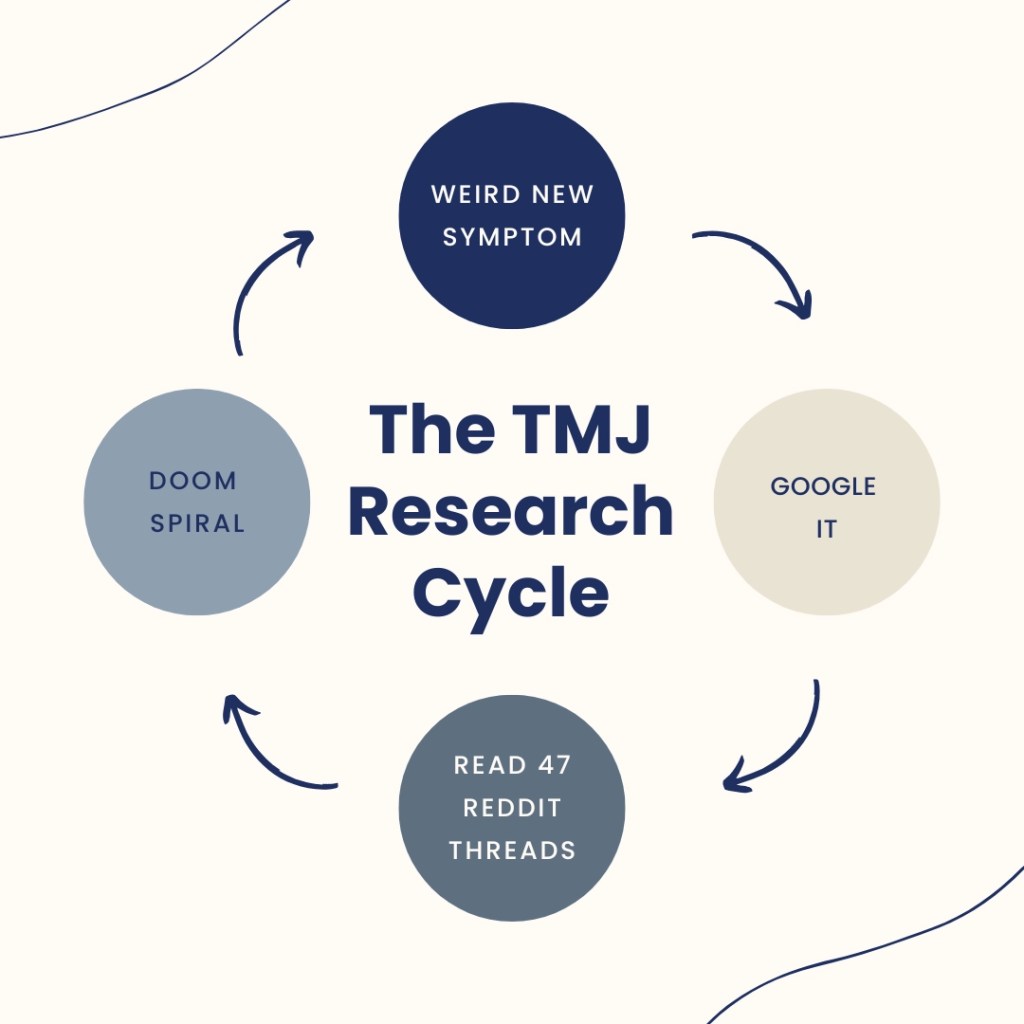
Part of the problem is that online communities naturally tell and engage with stories that have higher stakes. People who are struggling are often looking for support, while those who improve usually have less reason to keep posting. Of course, that doesn’t mean those stories aren’t worth reading. Many people find comfort in realizing someone else understands what they’re going through. It simply means those experiences aren’t necessarily a forecast for your own.
One of the hardest parts about living with TMJ disorder is that it quietly teaches you to monitor yourself. A good day brings relief. A bad day raises questions and mounting anxiety. Before long, it’s easy to slip into the habit of constantly evaluating how your jaw works, searching for reassurance that you’re moving in the right direction or worrying that you’ve somehow undone your progress.
The Question We Hear Most Often: Is it Too Late for My Jaw?
People don’t always ask this question directly, but it’s often sitting underneath everything else they want to know. Whether they’ve been dealing with symptoms for a few months or a few years, many eventually arrive at the same place: Did I wait too long? Have I done permanent damage? Is this just my life now? Those are heavy questions, and they’re usually driven by uncertainty as much as pain.
Symptoms and damage aren’t always the same thing. Some people have significant pain even though there are only minor changes inside the joint. Others have clicking or age-related changes for years with very little discomfort. How your jaw feels today is only one part of the story.
Dr. Kheir’s evaluation looks beyond a single symptom or scan. He examines how the jaw moves, evaluates the muscles, bite, and surrounding structures, and considers the habits that may be placing the system under strain. That broader view often answers a much more useful question than, “Is my jaw permanently damaged?” It helps explain what may be happening now and, more importantly, where improvement is possible.
Dr. Kheir’s Story
Dr. Kheir’s perspective on TMD is shaped not only by decades of treating patients, but by personal experience as well. Years ago, he was thrown from a horse and landed directly on his chin, an impact that almost certainly injured his jaw joint. Most people would expect an injury like that to lead to lifelong problems. Instead, he eats normally, works normally, and lives an active life. It’s a reminder that changes within the joint don’t automatically determine how much pain you’ll experience or what your future will look like.
His experience doesn’t mean every jaw injury heals the same way. What it does illustrate is that changes within a joint don’t automatically determine how much pain someone will experience or what recovery is possible.
Did You Know?
“Many people who consider themselves recovered still have the occasional bad day. What changes is that TMJ disorder no longer dictates what they can eat, how they sleep, or how they live their lives.”
Recovery Doesn’t Mean the Same Thing to Everyone
One of the biggest misconceptions about TMJ recovery is that there are only two outcomes. Either people get completely better, or they struggle forever. That’s an understandable conclusion if most of what you’ve read comes from online forums, but it doesn’t reflect what Dr. Kheir sees in practice.
For many patients, recovery isn’t a single moment where everything suddenly goes back to normal. It’s a gradual shift. Meals become easier, sleep improves, and bad days happen less often. TMD stops demanding your attention every hour of the day. Those moments may seem small, but they’re often the first signs that your life is beginning to take up more space than your TMJ.
That’s also why another person’s recovery can be a poor predictor of your own. Two people may receive the same diagnosis while dealing with very different conditions beneath the surface. One person’s symptoms may be driven largely by muscle tension, another’s by changes within the joint, and another’s by several factors working together. Their stories may begin in similar places, but they don’t necessarily end the same way.
Over time, many patients discover that progress isn’t measured by having a “perfect” TMJ. It’s measured by how much room their symptoms occupy in everyday life.
So… Is TMJ Disorder Permanent?
The honest answer is that it depends. Some people develop lasting changes within the jaw joint, while others deal primarily with muscles, habits, or factors that can change over time. A diagnosis of TMJ disorder doesn’t tell you how you’ll feel six months from now, just as a difficult week doesn’t predict the rest of your life.
If there’s one takeaway from this article, it’s this: don’t let your worst day, your latest flare-up, or someone else’s story convince you that your own has already been written. The first step isn’t figuring out whether your TMJ disorder is permanent. It’s understanding what’s actually driving your symptoms today.


UNDERSTAND TMJ Disorder treatment in Houston
TMJD Treatment Starts With Understanding the Cause
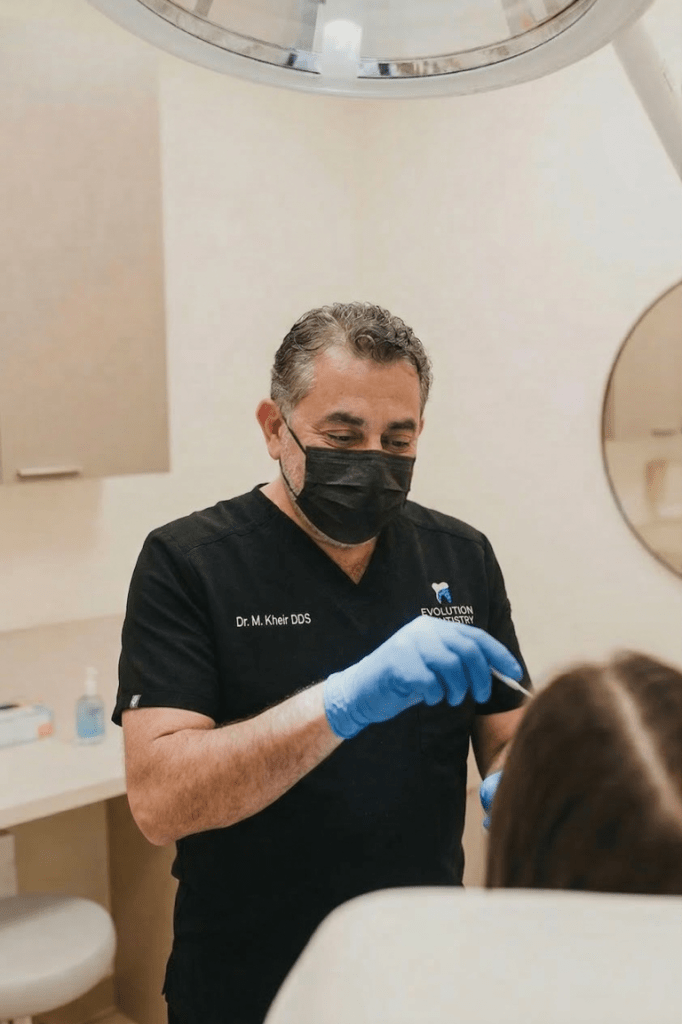
With more than 30 years of experience, Dr. Mohamad Kheir has spent his career solving problems that don’t always have simple answers. His background in reconstructive, cosmetic, and TMJ dentistry allows him to see how the teeth, bite, muscles, and jaw work together as one system. That perspective helps guide treatment that’s designed not only to relieve today’s symptoms, but to support healthier function for years to come.
Because treatment should improve the whole system, not just one symptom.
Explore TMJ Disorder Topics
-

Types of TMJ Disorders: Why Two People With “TMJ” Can Need Completely Different Treatment
Read more: Types of TMJ Disorders: Why Two People With “TMJ” Can Need Completely Different Treatment -

How Do I Know It’s TMJ Disorder? Signs Your Jaw May Be the Source of Your Symptoms
Read more: How Do I Know It’s TMJ Disorder? Signs Your Jaw May Be the Source of Your Symptoms -

How Dentists Treat TMJ Disorder: From Diagnosis to Treatment
Read more: How Dentists Treat TMJ Disorder: From Diagnosis to Treatment
