

Key Takeaways:
- There isn’t one “best” TMJ treatment. The right approach depends on what’s actually causing your symptoms.
- Most TMJ disorders are treated conservatively first. Education, habit changes, physical therapy, medications, and oral appliances are often considered before more invasive options.
- A thorough evaluation guides treatment. Your symptoms, jaw function, medical history, and contributing factors help determine which therapies are most appropriate.
- Oral appliances aren’t one-size-fits-all. Different designs serve different purposes, and not every patient needs one.
- The goal isn’t to try every treatment. It’s to identify the least invasive option that’s most likely to address the source of your symptoms.
If you’ve been researching TMJ treatment online, you’ve probably come across dozens of recommendations. One person swears by a night guard. Another says physical therapy solved everything. Others recommend Botox, injections, or surgery. With so many options, it’s easy to wonder which treatment is actually the right one.
The answer depends on what’s causing your symptoms. TMJ disorders aren’t all the same, and neither are the treatments used to manage them. Some involve the muscles, others the joint itself, and many are influenced by several contributing factors at once. That’s why treatment begins with understanding the diagnosis, not choosing a procedure.
Not Every Jaw Problem Has the Same Solution
It’s easy to find a list of TMJ treatments online. Choosing the right one is another story. An oral appliance might be exactly what one person needs and completely miss the mark for someone else. The difference isn’t the treatment itself. It’s the diagnosis behind it. In this guide, we’ll walk through how TMJ is evaluated, why treatment plans vary from person to person, and why starting with the least invasive option often leads to the best long-term results.
TMJ Treatment Isn’t One-Size-Fits-All
TMJ treatment isn’t a single procedure or a standard checklist. It’s a collection of treatment options chosen based on what’s actually causing your symptoms. The same jaw pain can come from very different tissues, and each may respond to a different approach.
- Muscles may benefit from reducing strain, physical therapy, or an oral appliance.
- Joints may require a different evaluation and treatment strategy.
- Inflammation may respond to medications or other conservative care.
Some patients improve within weeks, while others need a longer-term plan. The goal isn’t to offer every treatment. It’s to recommend the right one for your diagnosis.

What Happens During a TMJ Evaluation?
A TMJ evaluation is designed to answer one question: What’s actually causing your symptoms? It begins with a conversation about your health history, followed by an examination of how your jaw, muscles, and bite function together. From there, the goal is to rule out other conditions, identify which tissues are involved, and determine whether conservative treatment is appropriate or if additional imaging or referral would be helpful.
Diagnosis begins by putting the pieces together. We review your symptoms, medical history, daily habits, and examine how your jaw muscles, joints, and bite are functioning. If needed, imaging such as CBCT may provide additional information about the joint itself. Each finding helps narrow down whether your symptoms are coming from the muscles, the joint, another dental condition, or a combination of factors.
Treatment Usually Starts Conservatively
Many people are surprised to learn that TMJ treatment rarely begins with an invasive procedure. In fact, current evidence recommends starting with the least invasive options that match the underlying diagnosis. Small changes can sometimes reduce irritation enough to help the jaw recover, particularly when symptoms are caught early. If those approaches aren’t providing enough relief, treatment can be adjusted based on how you’re responding.
Understanding what’s contributing to your symptoms is often the first step toward improving them. During your evaluation, Dr. Kheir explains what’s happening inside the jaw, discusses factors that may be placing extra strain on the joint or muscles, and helps you understand which habits may be making symptoms worse.
Small, repetitive habits can have a surprisingly large impact on the jaw over time. Depending on your symptoms, treatment may include reducing activities such as clenching, teeth grinding, gum chewing, nail biting, or chewing on pens or ice. The goal isn’t to eliminate normal jaw movement. It’s to reduce unnecessary strain while the tissues recover.
When the jaw is irritated, constantly asking it to work harder can prolong symptoms. A temporary soft food diet, avoiding heavy chewing, and wearing a custom orthotic device when recommended can help reduce stress on the muscles and joints while they recover. These measures are typically used as part of early conservative treatment and adjusted as your symptoms improve.
Poor sleep and nighttime clenching often go hand in hand with TMJ symptoms. Improving sleep habits, applying heat or ice when appropriate, and following simple home exercises may all become part of a personalized treatment plan. These recommendations are selected based on your diagnosis rather than given as a one-size-fits-all checklist.
When muscle tension, movement patterns, or jaw mechanics are contributing to your symptoms, physical therapy may be recommended. Treatment can include exercises, manual therapy, posture training, and techniques designed to improve jaw function while reducing pain. For many patients, it becomes one piece of a broader treatment plan rather than the entire solution.
{Poor sleep and nighttime clenching often go hand in hand with TMJ symptoms. Improving sleep habits, applying heat or ice when appropriate, and following simple home exercises may all become part of a personalized treatment plan. These recommendations are selected based on your diagnosis rather than given as a one-size-fits-all checklist.}
When an Oral Appliance May Help
Oral appliances are one of the most common treatments for TMJ disorders, but they aren’t one-size-fits-all. Different appliances are designed to accomplish different goals, whether that’s reducing strain on the jaw muscles, protecting the teeth from grinding, improving jaw stability, or helping the joint function more comfortably. The right choice depends on what’s contributing to your symptoms, which is why a thorough evaluation comes first.
| Type of Appliance | Purpose |
|---|---|
| Stabilization splint (night guard) | Helps reduce stress on the jaw muscles and joints while protecting the teeth from clenching and grinding. Often recommended for muscle-related TMJ disorders and bruxism. |
| Anterior bite splint | Covers only the front teeth and may be used for specific muscle-related conditions. Because prolonged use can change the way the teeth fit together, it should only be worn under close professional supervision. |
| Repositioning splint | Temporarily changes the position of the jaw to reduce stress on certain joint structures. It may be appropriate in select cases involving joint dysfunction but is not recommended for every patient. |
| Custom oral appliance | In some cases, Dr. Kheir may recommend an appliance designed specifically for your diagnosis, symptoms, and bite rather than a standard design. |
Most importantly, an oral appliance doesn’t permanently “move your jaw back into place” or cure every TMJ disorder. Instead, it’s one tool that can help create a healthier environment for the muscles and joints while other treatments address the underlying cause. For many patients, it’s an important part of treatment. For others, it may not be necessary at all.
When Imaging Is Actually Helpful
Many people assume diagnosing TMJ starts with an MRI or CT scan. In reality, a thorough conversation about your symptoms and a physical examination often provide the most important information. Imaging certainly has a role, but it’s usually reserved for situations where the diagnosis remains uncertain, symptoms aren’t improving with conservative treatment, or there’s concern about joint damage, trauma, or another underlying condition. That approach isn’t simply a matter of convenience. It’s consistent with current evidence-based recommendations, which emphasize starting with the clinical evaluation before deciding whether imaging will provide information that changes treatment.
What About Injections for TMJ Disorder?
Injections are often discussed as a treatment for TMJ disorders, but the evidence isn’t as clear-cut as many people expect. While some therapies, including platelet-rich plasma (PRP), dextrose prolotherapy, and botulinum toxin (Botox), have shown encouraging results in certain studies, researchers haven’t reached a clear consensus on when they should be routinely recommended. The strongest evidence still supports beginning with conservative treatment and considering injections only after a thorough evaluation and when less invasive options haven’t provided adequate relief.
Did You Know?
“Not every TMJ injection is designed to treat the same problem. Current research suggests that Botox® may help some patients with muscle-related TMJ pain, while routine steroid injections into the jaw joint are generally not recommended because they haven’t consistently shown better results than simpler joint treatments and may increase the risk of cartilage damage over time. That’s one reason identifying the source of your pain is so important before deciding on treatment.”
Is Surgery Necessary for TMJ Disorder?
For a small number of patients, yes. But surgery is rarely the first step, and it’s almost never recommended without first trying appropriate conservative treatments. Most TMJ disorders improve with less invasive approaches, making surgery unnecessary for many people. When symptoms remain severe, joint function continues to decline, or the jaw has been affected by significant trauma, surgery may become part of the conversation. The goal is always to recommend the least invasive treatment that’s likely to improve your long-term outcome
Why Experience Matters
The most important decision in TMJ care often isn’t choosing a treatment. It’s choosing the right treatment for the diagnosis. Two patients with similar symptoms can benefit from completely different approaches depending on whether the problem involves the muscles, the joint, inflammation, or a combination of factors. That’s why a thorough TMJ evaluation is the foundation of care.
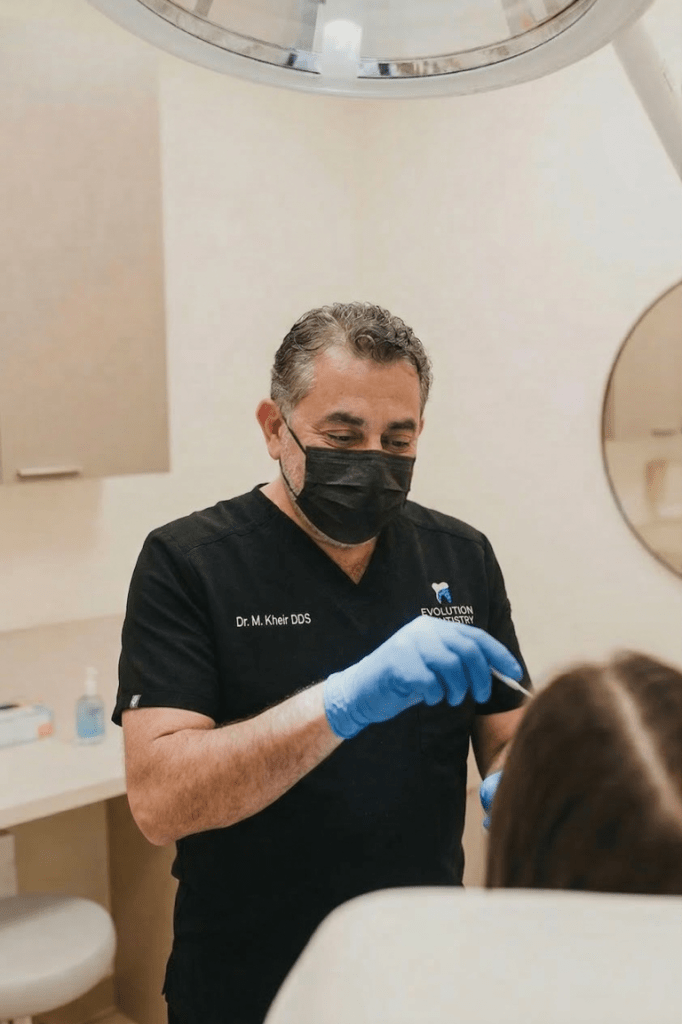
That’s the philosophy behind Dr. Kheir’s approach to TMJ treatment in Houston. Rather than relying on a standard protocol, he evaluates how your jaw functions, identifies what’s contributing to your symptoms, and recommends the least invasive treatment that’s appropriate for your diagnosis. Sometimes that’s an oral appliance. Sometimes it’s trigger point therapy, physical therapy, or simple habit changes. Sometimes the right recommendation surprises patients in its simplicity and effectiveness. The goal is to help you understand what’s happening, why it’s happening, and what gives you the best chance of lasting improvement.


UNDERSTAND TMJ Disorder treatment in Houston
TMJD Treatment Starts With Understanding the Cause
With more than 30 years of experience, Dr. Mohamad Kheir has spent his career solving problems that don’t always have simple answers. His background in reconstructive, cosmetic, and TMJ dentistry allows him to see how the teeth, bite, muscles, and jaw work together as one system. That perspective helps guide treatment that’s designed not only to relieve today’s symptoms, but to support healthier function for years to come.
Because treatment should improve the whole system, not just one symptom.
Explore TMJ Disorder Topics
-
Types of TMJ Disorders: Why Two People With “TMJ” Can Need Completely Different Treatment
Read more: Types of TMJ Disorders: Why Two People With “TMJ” Can Need Completely Different Treatment -

How Do I Know It’s TMJ Disorder? Signs Your Jaw May Be the Source of Your Symptoms
Read more: How Do I Know It’s TMJ Disorder? Signs Your Jaw May Be the Source of Your Symptoms -
How Dentists Treat TMJ Disorder: From Diagnosis to Treatment
Read more: How Dentists Treat TMJ Disorder: From Diagnosis to Treatment
