
TMJ Treatment in Houston: Symptoms & Treatment Options
Conveniently located in Houston’s Tanglewood neighborhood, Evolution at Tanglewood Dental cares for patients from Memorial, the Galleria, Uptown, River Oaks, and nearby communities seeking thoughtful, conservative treatment for TMJ disorders. Every evaluation begins with understanding what’s contributing to your symptoms so we can recommend care that’s appropriate for your situation.
Could Your Symptoms Be Related to TMJ Disorder?
Many people think TMJ disorder only causes jaw pain. It can, but that’s only part of the story. You don’t need to experience every symptom below to have a TMJ disorder. Some people have just one or two, while others notice a combination that changes over time. Because the jaw joints and muscles are closely connected to the rest of the head and neck, the signs aren’t always as obvious as you might expect.

Jaw Pain
& Stiffness
Pain around the jaw joints, soreness when chewing, or difficulty opening your mouth comfortably. Some people notice stiffness first, while others develop pain that comes and goes.

Headaches
& Facial Pain
Recurring headaches, aching temples, sore cheeks, or facial tenderness can sometimes be linked to overworked jaw muscles and changes in jaw function.
Ear
Symptoms
Ear pain, pressure, fullness, ringing, or buzzing can occur even when the ears themselves appear healthy. In some cases, the jaw may be contributing to these symptoms.

Clicking, Popping,
& Locking
A jaw that clicks, pops, catches, or locks isn’t always a problem, but when it’s painful or limits movement, it’s worth having evaluated.
Teeth Grinding
& Pain
The muscles that move your jaw work closely with those in your neck and shoulders. When one area is under strain, the other often feels it too.

Neck & Shoulder
Tension
Clenching and grinding can overload the teeth, jaw muscles, and joints. Some people develop worn teeth or pain that feels like a toothache, even when the tooth itself is healthy.
Could Your Symptoms Be Related to TMJ?
Many people think TMJ disorder only causes jaw pain. It can, but that’s only part of the story. You don’t need to experience every symptom below to have a TMJ disorder. Some people have just one or two, while others notice a combination that changes over time. Because the jaw joints and muscles are closely connected to the rest of the head and neck, the signs aren’t always as obvious as you might expect.
Jaw Pain
& Stiffness
Difficulty chewing or opening your mouth
Headaches
& Facial Pain
Aching temples, sore cheeks, or tenderness
Ear
Symptoms
Pressure, fullness, ringing, or buzzing
Clicking, Popping,
& Locking
Jaw movement that catches or feels stuck
Teeth Grinding
& Pain
Jaw fatigue or morning soreness may be a clue
Neck & Shoulder
Tension
Tightness in the neck may be related to jaw function.
Could Your Symptoms Be Related to TMJ?
Many people think TMJ disorder only causes jaw pain. It can, but that’s only part of the story. You don’t need to experience every symptom below to have a TMJ disorder. Some people have just one or two, while others notice a combination that changes over time. Because the jaw joints and muscles are closely connected to the rest of the head and neck, the signs aren’t always as obvious as you might expect.
Jaw Pain
& Stiffness
Difficulty chewing or opening your mouth
Headaches
& Facial Pain
Aching temples, sore cheeks, or tenderness
Ear
Symptoms
Pressure, fullness, ringing, or buzzing
Clicking, Popping,
& Locking
Jaw movement that catches or feels stuck
Teeth Grinding
& Pain
Jaw fatigue or morning soreness may be a clue
Neck & Shoulder
Tension
Muscle strain can spread beyond the jaw
Common Causes of TMJ Disorders
It’s natural to look for the one thing causing your TMJ symptoms. In reality, it rarely works that way. TMD often develops from a combination of factors rather than a single event, which is why two people with nearly identical symptoms may need very different treatment. Below are some of the most common contributors, but they’re rarely the whole story.
A fall, sports injury, car accident, or direct blow to the jaw can sometimes immediately trigger TMJ symptoms. In other cases, symptoms develop gradually months after the original injury.
Many people clench or grind their teeth without realizing it, especially during sleep. Over time, the added pressure can overload the jaw muscles and joints, contributing to pain and reduced jaw function.
Overworked jaw muscles are one of the most common causes of TMJ pain. Clenching, grinding, stress, and repeated muscle strain can lead to soreness, headaches, facial pain, and stiffness.
The cushioning disc inside the jaw joint can shift out of position, become inflamed, or wear down over time. Arthritis and age-related changes can also affect how the joint moves.
The way your teeth come together can influence how your jaw functions. Missing teeth, significant tooth wear, or changes in the bite may place additional strain on the muscles and joints in some patients.
Stress doesn’t directly cause every TMJ disorder, but it can contribute to muscle tension and unconscious clenching. Habits such as chewing gum frequently, biting nails, or holding the jaw in a tense position may also aggravate existing symptoms.
How We Diagnose & Treat TMJ Disorder
TMJ treatment isn’t one-size-fits-all because TMJ disorders aren’t one-size-fits-all. Someone whose symptoms are coming from overworked muscles may need a very different approach than someone dealing with joint inflammation, arthritis, or changes inside the joint itself. That’s why treatment begins with understanding what’s contributing to your symptoms rather than assuming every painful jaw needs the same solution.
In most cases, treatment starts with the most conservative option that’s appropriate for your diagnosis. As symptoms improve, progress is monitored and the plan is adjusted only when needed. The goal isn’t to recommend every available treatment. It’s to choose the approach that’s most likely to improve your jaw function while avoiding unnecessary procedures.

Why is TMJ Disorder So Often Misdiagnosed?
Most health conditions follow a familiar pattern. TMJ disorders often don’t. Two people can have the same diagnosis and describe completely different symptoms, while two people with nearly identical symptoms may have different underlying causes. It’s one reason finding answers isn’t always straightforward.

Why is TMJ Disorder So Often Misdiagnosed?
Most health conditions follow a familiar pattern. TMJ disorders often don’t. Two people can have the same diagnosis and describe completely different symptoms, while two people with nearly identical symptoms may have different underlying causes. It’s one reason finding answers isn’t always straightforward.

“I ended up going to Evolution at Tanglewood Dental [for my TMJ issues] … they were very kind, knowledgeable, and incredibly respectful to patients that are doing out-of-network filing for the first time. Overall I feel that the quality and value of care I received matched the cost of treatment and finance options are available through Cherry that most people will qualify for! I thought that I’d never be able to access the kind of care that I needed but Evolution at Tanglewood Dental proved me otherwise.”
— TMJ Patient Testimonial
Dr. Kheir’s TMJ Therapy
When pain starts taking things away from you, it’s natural to want the fastest path back to normal. Dr. Kheir believes lasting improvement begins with understanding how the jaw, muscles, bite, and teeth are working together before deciding what needs to change. That often means starting with the least invasive treatment that can reasonably help. It also means recognizing when years of wear, missing teeth, or changes in the bite have left the system without the support it was designed to have. His experience in reconstructive and cosmetic dentistry brings those missing pieces back into the conversation, with the goal of creating a healthier foundation for comfortable, long-term function.
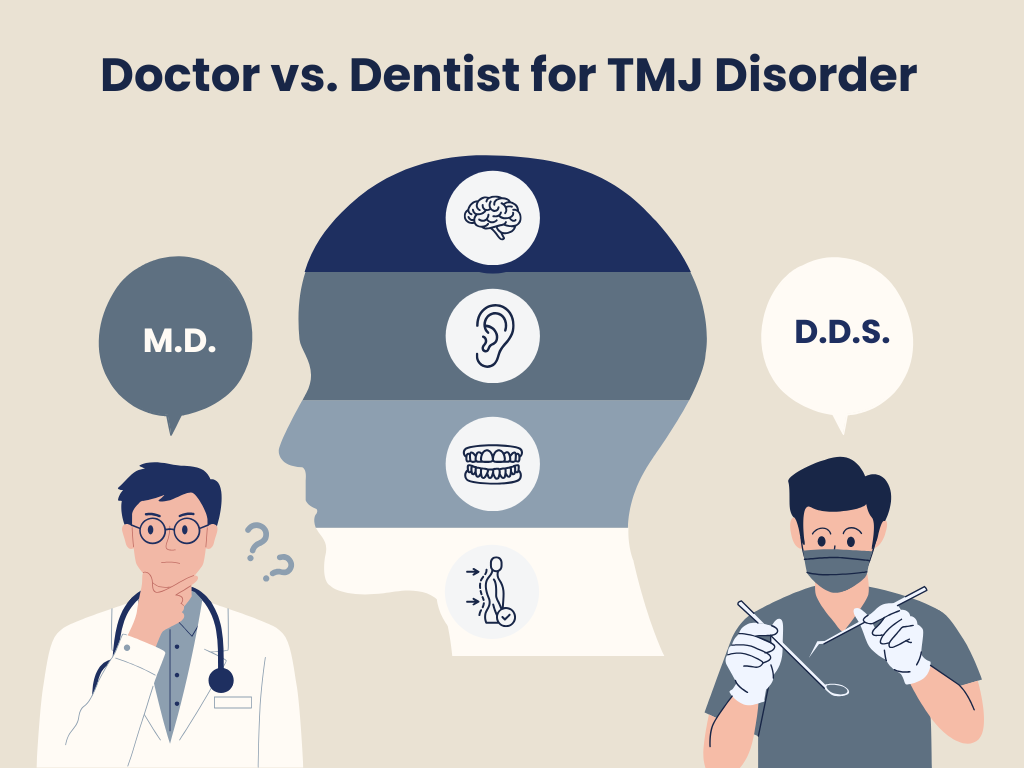
Doctor vs. Dentist for TMJ: Who Should You See First?
Wondering whether you should see a doctor or dentist for TMJ? Learn how TMJ disorder is diagnosed, which healthcare providers treat jaw pain and temporomandibular joint disorders, and why experience often matters more than a professional title when choosing where to start.
Understanding
Types of TMJ Disorder
Not every TMJ disorder begins the same way, so treatment shouldn’t either. The statistics and contributing factors shown here highlight just how complex these disorders can be. TMJ disorders are common, frequently overlap with other conditions, and may involve several contributing factors working together instead of one isolated cause.
Miofascial Pain Disorder
A disorder affecting the jaw muscles and surrounding connective tissues (fascia). Pain often develops from sensitive trigger points within the muscles rather than damage inside the jaw joint itself.
Internal Joint Derangement
A disorder affecting the cartilage disc inside the temporomandibular joint. When the disc moves out of its normal position, it can interfere with how the jaw opens, closes, and moves.
Degenerative Joint Disease
A form of arthritis affecting the temporomandibular joint. As the cartilage gradually wears down, changes can occur in the surrounding bone and joint structures, affecting how the jaw moves.
Inflammatory Joint Disorder
A group of autoimmune and inflammatory diseases that can affect the temporomandibular joint as part of a broader medical condition, leading to inflammation, pain, and reduced jaw function.
TMJ Ankylosis
A rare condition in which the temporomandibular joint becomes partially or completely fused, making it difficult or impossible to open the mouth normally.


UNDERSTAND YOUR OPTIONS
TMJ Treatment in Houston Starts With Understanding the Cause
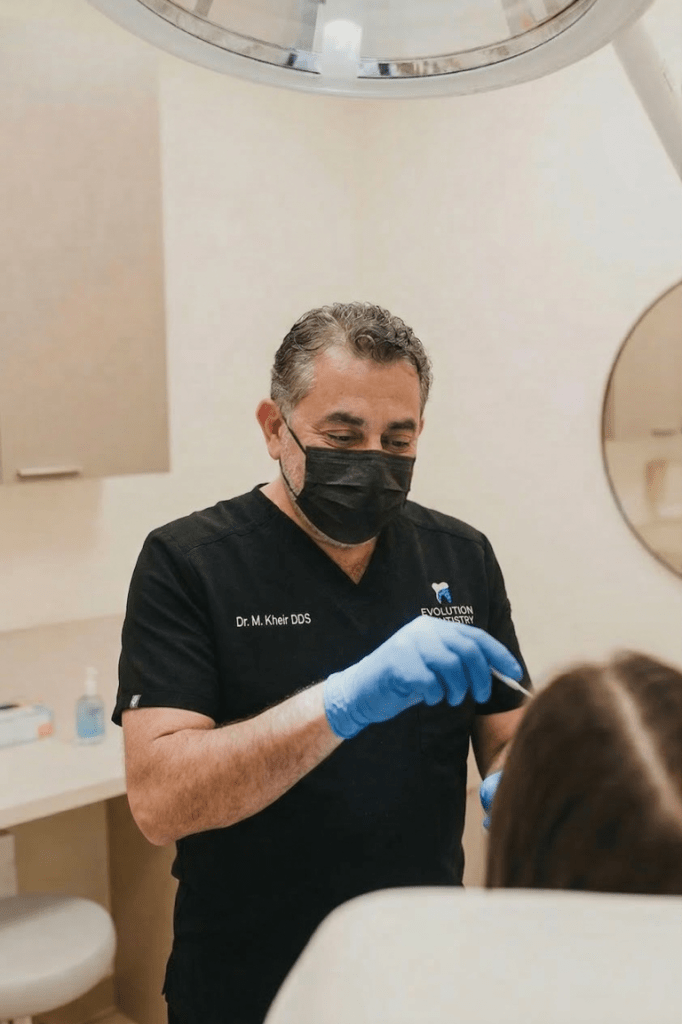
With more than 30 years of experience, Dr. Mohamad Kheir has spent his career solving problems that don’t always have simple answers. His background in reconstructive, cosmetic, and TMJ dentistry allows him to see how the teeth, bite, muscles, and jaw work together as one system. That perspective helps guide treatment that’s designed not only to relieve today’s symptoms, but to support healthier function for years to come.
Because treatment should improve the whole system, not just one symptom.
Explore TMJ Treatment Topics
-
Types of TMJ Disorders: Why Two People With “TMJ” Can Need Completely Different Treatment
Read more: Types of TMJ Disorders: Why Two People With “TMJ” Can Need Completely Different Treatment -
How Do I Know It’s TMJ Disorder? Signs Your Jaw May Be the Source of Your Symptoms
Read more: How Do I Know It’s TMJ Disorder? Signs Your Jaw May Be the Source of Your Symptoms -
How Dentists Treat TMJ Disorder: From Diagnosis to Treatment
Read more: How Dentists Treat TMJ Disorder: From Diagnosis to Treatment
